
Chapter 1 What is Real Yoga?
Chapter 1 What is Real Yoga?
Yoga has always been a diverse tradition in constant evolution. So, it’s hard to point to one thing and say, this is yoga (and then, that is not yoga).
In classes around the world we constantly hear that something isn’t real or traditional yoga. Nobody wants to feel that current asana practices are a modern invention, that they’re not authentic.
What I shall argue in this book is that they’re not, however they are certainly a certain re-appraisal of the old in a newer format as I shall discuss.
When we look at the term yoga, it seems to have always been used for a whole multitude of practices. Almost any practice involving consistent effort to change something deeply for the better with our experience in our experience has been called yoga.
Along which lines ‘traditional’ would appear to cover a wide range of practices. ‘Hatha’ yoga, a common term used to denote the physical practice of postures, asanas, comes from the root ha, denoting a kind of forceful perseverance.
If we attempt to put the whole yoga tradition under the one roof, we are forced to paint with broad strokes. After a great deal of reflection, there are two fundamental qualifiers for the use of the term in my mind.
And this matters, not to prove some people right and some wrong, but just to respect the term yoga, and all the effort and reward for so many over the last few thousand years, (at least). It’s more than a little unfair to confuse the depth of yoga with a ‘modern wellness’ practice (although, there’s also value to these too).
My first qualification of yoga is to do with the aim, in as much as it needs to be far-reaching. Yoga is a term used for a goal that offers a complete solution to the problem of existence.
This includes the perennial unsatisfactoriness of life as well as our fear of death and what happens to us. That is, the aim must be the highest aim, not just a temporary respite, or a slight amelioration of our symptoms as we might expect from modern wellness.
Rather, it must be a permanent resolution, and it must be utterly complete leaving nothing lacking, anything more at all that could render our experience more satisfactory.
In addition, yoga must be derived by coming into a more direct (true) perception of reality, rather than if we were to experience a permanent solution through retreating into an imaginary realm.
Other qualifiers are more debatable. Some methods of yoga involve a direct experience of Self as a permanent, unmoving entity. In others, like Buddhism, this is the experience of a lack of self, rather the Self is seen as being shared or part of all things.
While some believe that this experience is to do with a relationship with an ultimate being, (God), others go as far to say that there’s no personal relationship; that everything we experience is God, or, simply, that a creator God who has interest in his creation, simply doesn’t factor.
The second qualification I suggest for something to be reasonably known and referred to as yoga, is that the method must be based on a certain relationship with an unseen energy lying between or behind the mind and body.
For example, the philosophy of the Western tradition could not be called yoga, as it is interested in only the mind. It isn’t interested in redeeming a certain energy that lies behind body and mind.
Whereas, for example, the pure jnana yoga of mental contemplation on a higher truth is still practiced for the sake of coming into an energy that’s beyond the mind. Even if it exclusively uses the mind, it’s still done with recourse to the body because this knowledge is reached through the recognition of a non-identification with the body.
Attempting to Qualify yoga method is equally as open-ended as qualifying it through its aims. Sometimes, for example, this energy is reached as in tantric yoga through a further embodiment, coming more deeply into the body.
At other times, we find with what might be termed Classical Yoga, generally more inclined to favour the above-mentioned jnana yoga as its method, being complete rejection of the body.
We’ve all heard the common definition of yoga as union, but for most of its existence, yoga has more reasonably stood as a method of utter disunion; a method of uncoupling the individual energy or atman (‘soul’), with everything else, to abide in its unchanging essence.
What we’re always talking about is experience that’s utterly complete, permanent and real. One that is reached through a method of consistent practice of relating mind to body in a certain way.
Coming back to the original question regarding the ‘tradition’ of modern yoga, undoubtedly, it is a new kind of synthesis of method and aims. But are the new methods and aims in keeping with my above attempt at definition?
Firstly, it’s important to re-emphasize what should be clear from the above; that tradition in my view, is not to do with specifics, rather general principles. Which is where people can get off track, considering a specific detail stands for the tradition itself, where in fact, these need to constantly evolve and adapt to suit the constantly changing context - which is why they always have.
They can also lose their way and change so much that they’re no longer a tributary of the same river, rather, a new stream altogether. Which is what we’re talking about here; whether modern yoga, uprooted from its native soil, replanted and nurtured in a Western one, is still the same plant, or an utterly new one.
I feel it helpful to consider, as I shall do later in this work, the teachings of Sri Krishnamacharya and other early modernizers responsible for the spread of yoga in the West and ask, firstly, if they’re teachings were faithfully translated? Secondly, whether these teachings were themselves in line with the general flow of yoga that went before?
It’s hard not to notice the presence of a juncture or bridge between pre-modern which I shall now call pre-20th century going forward, and modern, 20th century yoga and beyond.
Most specifically, in the changes of the method; the attempt by these modern teachers to streamline the various branches or methods down to one homogenous trunk: yoga asana. A method that had previously been an ‘auxiliary practice’, one branch of the whole tree or method, now became a hub or locus where all methods coalesced and could be practiced.
Yet, as I shall suggest going forward, if the method of asana is still framed by the attempt to manipulate the third component (after body and mind), the unseen energy in the body, then it’s still on this front, the same plant we’re talking about.
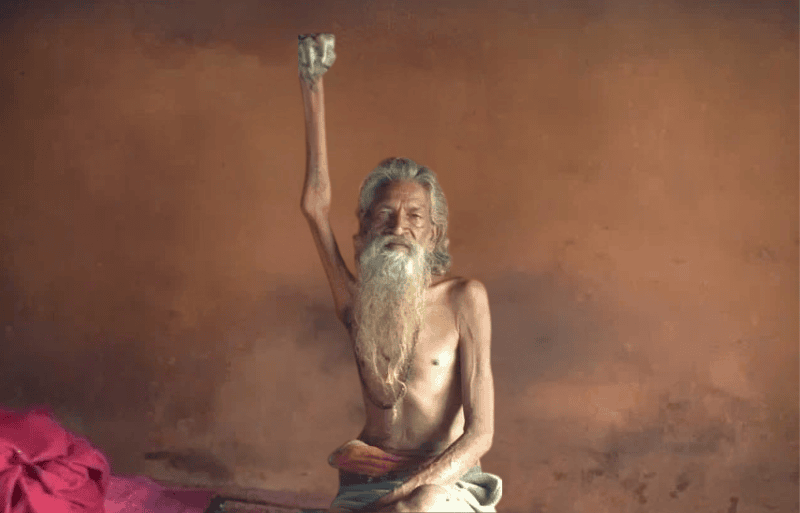
There have been many ways, traditionally, that this has been done, from holding one hand in the air for years on end, to living a responsible life as a householder while focusing on a higher meaning. Any modern method we chose, it would be hard to be found deviant as long as it was for the sake of this energy.
Regarding the aim it’s a bit more complicated. Here, an argument could be made for the fact that we’re no longer aiming for a truer experience of reality, nor a lasting and complete resolution of the problem of existence, rather a little comfort or ‘wellbeing’, and the excitement of a challenge.
On the other hand, I argue that, regardless of our seeming nonchalance or complacency to this modern physical practice, despite the emphasis on achieving certain shapes with our body, underneath this, our deeper aims, albeit unspoken and often hardly conscious even to us, remain the same.
A dramatic transformation happened from within India at the turn of the 20th century. Equally indisputable is that when this plant travelled outside India, first to the West where it was replanted in a different context, in a different soil, once again it was radically altered, flourishing under different auspices.
However, what I shall argue is that, according to my above definition of the general river or tree of yoga, we may have a new plant, or tributary stream, but it’s still wholly connected to the original source.
