
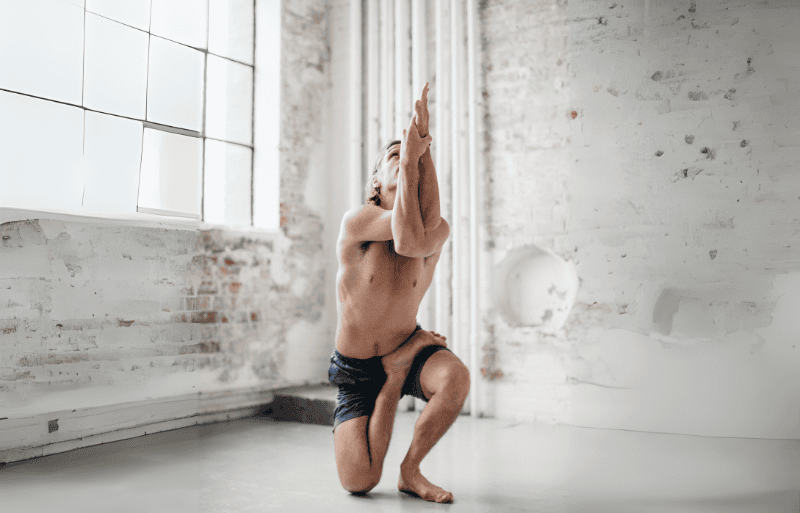
Ashtanga Intermediate Series Online Course (recorded)
ASHTANGA INTERMEDIATE SERIES ONLINE COURSE - FOR ALL
This six session course was recorded from a live Zoom course from January 2023.
The Ashtanga intermediate series was always taught in the early days along with primary (ie. as one long series). It seems fair to assume it was meant for everyone – just like primary is. Rather than the exclusive way this series is now most often handled, Adam believes that the Ashtanga intermediate series was always intended to complement and balance the primary.
In a physical sense; therapeutically for the body, as well as on a deeper, energetic level. Everyone should have their own version of both Ashtanga intermediate series and primary to alternate between.
Even though this sequence is, potentially, more challenging than the primary, it is still possible for all students to find a version of each posture that preserves the essence of these postures, whilst being accessible, safe, and sustainable.
Through this series of technical workshops, as well as working together in a group style and led class format to conclude, Adam will break down the Ashtanga intermediate series into approachable parts.
Thereby we can construct our own version out of the fundamental building blocks we are left with. It's worth pointing out that the series is powerful. Indeed, known as nadi shodhana, nerve cleansing, it ought to be approached with care.
Throughout the Ashtanga intermediate series course we will be constantly checking back together; judging our efforts by these four criteria:
- Comfort
- Sustainability
- Effectiveness for progression
- Effect on overall energy of the body (in daily life)
This last checkpoint, often forgotten in our rush to achieve asanas, is obviously the most important.
ASHTANGA INTERMEDIATE SERIES ONLINE COURSE SESSIONS
Session 1: Backbends - Salabasana To Supta Vajrasana
These backbends should prove effective for mobilising the upper (thoracic spine). However, all too often, they only tend to compress and compromise the lower back for practitioners. There are a few basic principles that we consider in correcting this; efficient use of the legs, pulling across the body, and, a deeper understanding of the use of diaphragmatic breathing in these postures. Then, as well as all this, we shall, of course, discuss the dreaded kapotasana and how to best approach this for each and every person.
Session 2: Twists - Bharadvajrasana And Ardha Matsyendrasana (As Well As Pasasana And Parighasana)
‘Twists’ is one of those unfortunate translations. It makes one think of turning in one direction only – simply twisting away from ourselves. However, it is far better to consider these postures as ‘wringing out’; the application of force in opposing directions. This exerts a unique stimulation on the spine, as we twist in one direction at the top and in the opposite direction at the base. This technique also preserves the stability of the lumbar spine which is often jeopardised in these positions by attempting to twist in this area. These postures are some of the most effective positions we can do so demand a good deal of focus. A good deal more than they generally get as they are often glossed over for the more spectacular postures that follow.
Session 3: Hip Openers - Eka Pada Sirsasana To Yoga Nidrasana
Leg-behind-head doesn’t need to be seen as the end of the road. Indeed, it is an obstacle, yet everyone can find their way to represent this movement effectively in ones’ own body. Then, get the necessary work to progress further towards the fuller expression of the postures. Even if the legs won’t seem to go behind the head, we can use a few extra stretches at this point (in or out of our practice), to facilitate this process. A range of hip openers will be presented as a sequence at this point. This can then be done on its own or as part of practice by each person according to their wish.
Session 4: Arm Balances - Tittibasana To Nakrasana (As Well As Setting The Scene With Bakasana And Wrapping-Up With The 7 Headstands)
Even if you think you’re not strong, you are. The only problem is that you’re yet to get the most out of the muscles that you already have. Understanding how to engage the muscles of the back so they work to support each other, you can come into a strength you didn’t even realise you had. The question is only how to get a feeling for this very subtle engagement. It lies particularly in two principles; a deeper understanding of what bandha really means, as well as more focus on how to stretch effectively across the body. Building up from our foundations in bakasana, once recognise the keys to the movement here, everyone will be able to expand this further to the most exciting arm balancing involved in Intermediate, developing confidence along with the newfound stability experienced.
Session 5: Symbol And Mudra - Vatayanasana And Gomukasana (As Well As Other Points In The Series Where The Actions Don’t Immediately Seem Understandable On A Physical Level).
After all, the series is called ‘nadi shodhana’. There are a number of small gestures that serve as ‘mudra’; subtle gestures that act as transistors to cultivate further energetic engagement. Sometimes, these are specific to the whole of a particular asana, at other times, they are hidden details outside the obvious mechanical actions of a posture. Recognising and utilising them steps up the energy in the body as transistors do.
Session 6: Full Led Intermediate
We will come together in a full-led class; where we can bring together all the components that we have been working on up to this point. Then, in the very last session, there will be a troubleshooting workshop on areas still causing particular challenges or confusion. And, as well, to round it all off, a general chat and share on our experience with the Intermediate series up to this point. Both on and off the mat.
