
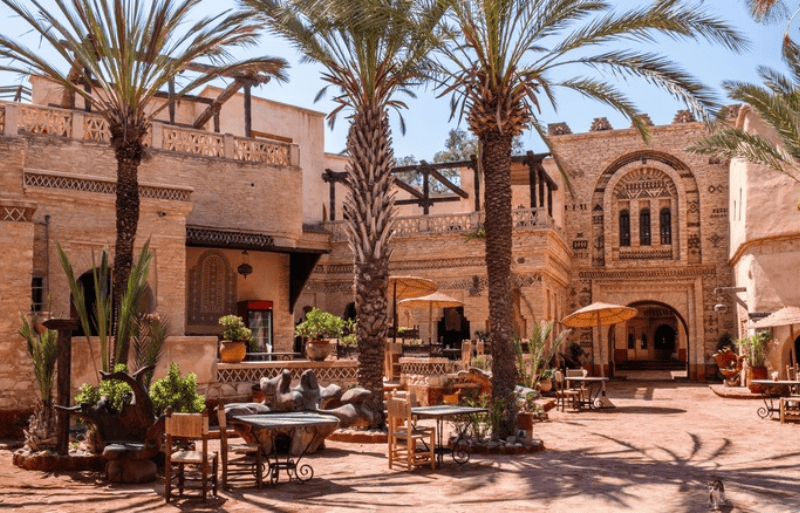
Ashtanga Workshop in Agadir, 2027
Ashtanga Workshop in Agadir, Morocco
Friday March 19 – Sunday 21, 2027
Le Studio, Agadir
Make Ashtanga Yoga Work For You
What are the cornerstones of the method of Ashtanga Yoga, and how to adapt these general principles into individualised principles so that they work for you personally? In this time together we shall go through the basis of Ashtanga; what does bandha mean? What is drishti, vinyasa, what about the breathing? On completion of this workshop you will have a good overview of Ashtanga Yoga and the confidence that you are practicing it safely and effectively for your, unique body.
Friday March 19
6.00 – 7.30 pm: Intro Chat & Half Led Primary with Instructions
This unique style of led class is a guided class as well as giving the fundamental cues for each
posture. Everyone will be made to feel welcome and safe in participating in this class, with options given for variations depending on your body, level and energy that day.
Saturday March 20
8.00 – 10.00 am: Ashtanga Self-Practice
This practice is based on individual exploration, kindness, and fun. Adam gives yoga assistance in a safe and non-intrusive way. He does not believe in forcing people into postures, rather, he uses verbal and light physical touch to open new directions for you to follow if you wish. All are welcome to the Mysore class. Adam is happy if you need practice sheets, but you should have memorised at least the sun salutations A and B and some of the standing sequence.
10.30 – 12.00 pm: Insights Into The Fundamentals
The Primary series is, for the most part, made up of what are commonly called ‘forward folds’. However, the direct translation of the fundamental forward fold is ‘Paschimottanasana’; literally, ‘westward faced back-stretch’. With yoga traditionally practiced facing East, this means instead of folding forward we’re stretching backwards. With this information, we shall look at the seated asanas of the Primary series, seeing now how they help unlock the deep muscles of the back, while also avoiding the problems to do with common approach of over-stretching forward; hamstrings and lower back issues.
12.30 – 2.00 pm: What Exactly is Traditional Ashtanga Yoga?
People often think Ashtanga means the rigid adherence to the series’ as they are currently known, but these have changed over the years as has the teaching method. In this session we will look at how to define Ashtanga yoga and what being a ‘traditional teacher’ means. We will look at:
- How did the name originate? Did it come from Patanjali’s Ashtanga Yoga and if so, why doesn’t it seem to incorporate the other limbs Patanjali mentions?
- What came from Krishnamacharya and what came from Pattabhi Jois?
- How does the Ashtanga yoga of Jois differ in methods and aims to other styles of modern yoga – for example, to what his contemporary B.K.S Iyengar taught?
- How has the approach to Jois’ Ashtanga developed from when he first started teaching it to Westerners in 1972?
Sunday March 21
8.30 – 10.00 am: Ashtanga Self-Practice
This practice is based on individual exploration, kindness, and fun. Adam gives yoga assistance in a safe and non-intrusive way. He does not believe in forcing people into postures, rather, he uses verbal and light physical touch to open new directions for you to follow if you wish. All are welcome to the Mysore class. Adam is happy if you need practice sheets, but you should have memorised at least the sun salutations A and B and some of the standing sequence.
10.30 – 12.00 pm: Jump Back & Jump Through; Are They Worth the Effort?
This movement is one example of a vinyasa (breath movement combination). It joins many primary series asana up together, because it builds strength and mobility of the fundamental back muscles. But, what happens if you can’t do them? And is it the case that some people have too short arms to ever do this movement? We will look here at building up the movement from the start, with everyone gaining the technique to get the most out of it – whatever level you’re currently at. Indeed, this movement is a ‘trick’, and in this workshop we shall share the secrets to this trick.
12.30 – 2.00 pm: Modern Yoga Development in the 20th Century.
Find out how key ‘early modern’ yoga teachers. Krishnamacharya, Yogendra, Yogananda, Kuvayalananda and Vivekananda interpreted the older practices of yoga to fit into the modern context. Then, what other influences, those outside the yoga tradition, they may have drawn from to create modern yoga. A term we shall explore in its differences and similarities to the pre 20th century iterations of yoga regarding breath, asana, and the guru-disciple relationship that defined yoga in the past, and, indeed, the aims of these practices..
Bookings are taken and managed by Ihssane at Le Studio Agadir, ihssane.sarif@gmail.com
About Adam Keen
Adam has been a yoga practitioner since 1999 and has taught Ashtanga yoga internationally for over twenty years. His style is open, non-dogmatic and eclectic while remaining rooted in an appreciation of the benefits of the method of ashtanga as he learnt it in Mysore, India.
In 2012 he completed the Advanced A sequence with Sharathji and was authorized to teach. Adam meets all students where they are, hopefully, with humour, kindness and inspiration, holding a safe and supportive space for personal inquiry. He is also the co-founder of Keen on Yoga and the Keen on Yoga podcast with his wife Theresa.
Instagram: @adam_keen_ashtanga & @keen_on_yoga
